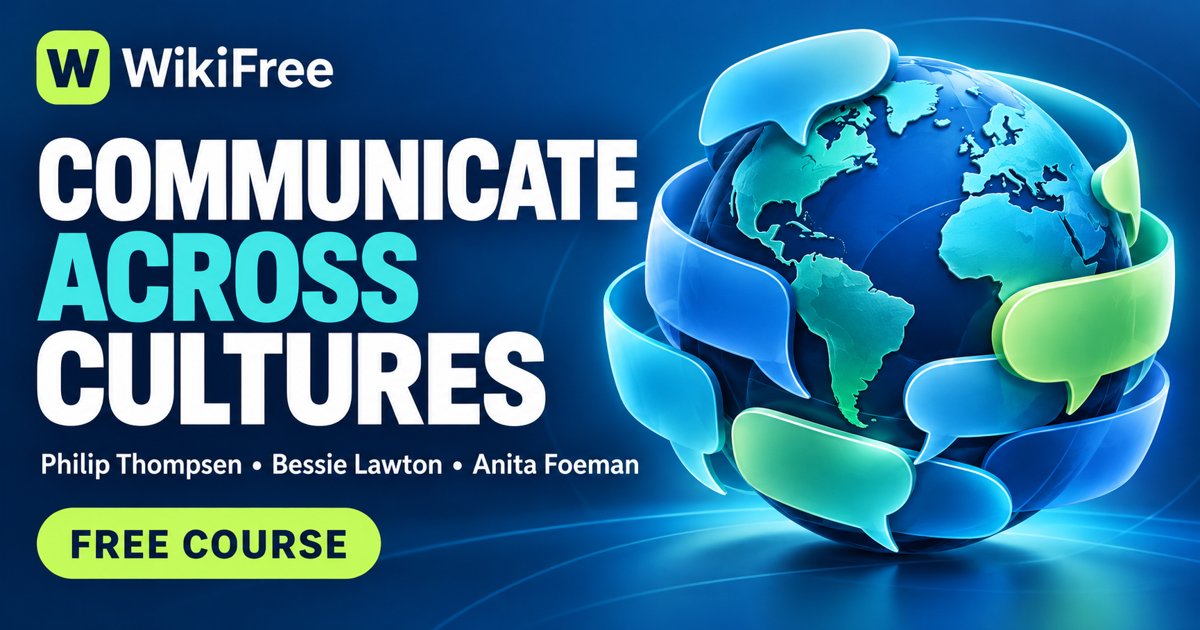
Listed as Free on Udemy when checked on 21 October 2026. No coupon or subscription trial is required for the listed lessons. Enrollment needs a Udemy account; availability can change.
About this course
A message can carry different meanings when people bring different assumptions to it. Philip Thompsen, Bessie Lawton and Anita Foeman introduce intercultural communication by examining meaning, context and the beliefs, values and practices that shape a conversation.
Their course moves from cultural building blocks to Hofstede’s taxonomies and the cultural patterns associated with Kluckhohn and Strodtbeck. Personal and research examples, including family and social practices, show how those frameworks are applied in a discussion.
| Official course | A World of Difference: Exploring Intercultural Communication |
|---|---|
| Created by | Philip Thompsen; Bessie Lawton; Anita Foeman |
| Platform | Udemy |
| Language | English |
| Level | All Levels — Udemy listing |
| Listed duration | 66 minutes; 10 lectures across 4 sections |
| Certificate | Not included with a new free enrollment |
Skills you’ll gain
- Recognizing the role of context
- Distinguishing cultural building blocks
- Comparing cultural frameworks
- Questioning assumptions in communication
No special supplies are needed, although additional readings are suggested. The course includes discussion of funeral customs and family experiences as examples of cultural difference. The instructors use these examples to connect cultural concepts with particular lived experiences.
Use the frameworks as prompts for questions, not labels that predict how every person from a country will behave. Some demographic illustrations and reference material are historical; they should not be used as current population statistics.
Frequently asked questions
Which frameworks are introduced?
The curriculum includes Hofstede’s cultural taxonomies and Kluckhohn and Strodtbeck’s cultural patterns.
Does the course require a textbook purchase?
No special supplies are listed as necessary. Further readings are suggested, rather than established as a required paid textbook for enrollment.
Checked on 21 October 2026 using the public course details and syllabus. WikiFree has not watched every lesson or tested full playback. New free enrollments do not include a Udemy completion certificate, instructor Q&A or direct messages.
Questions & discussion
Share a useful question or correction. Comments appear after moderation. Please avoid personal or sensitive information.